PROGRAMME STATUSThe Greener Homes Grant and Loan are closed — but nine programmes still require an EnerGuide evaluation · see what is open where you live

ERS Service Organization · Licence 9E · since 2015

We measure what a building actually costs to run.

Two practices, properly separated. Residential EnerGuide evaluations are carried out by registered energy advisors under our ERS Service Organization licence, number 9E — the licence that lets a rating be issued at all. Commercial and industrial audits are led by Certified Energy Managers and other qualified licence holders on our team. Both produce reports that government, utility and lending programmes accept as evidence, and both travel across Canada.

9EOrganization licence number 13provinces and territories served 28programmes tracked and dated
EnerSolution energy advisors, on site An EnerSolution energy advisor carrying out a home energy evaluation
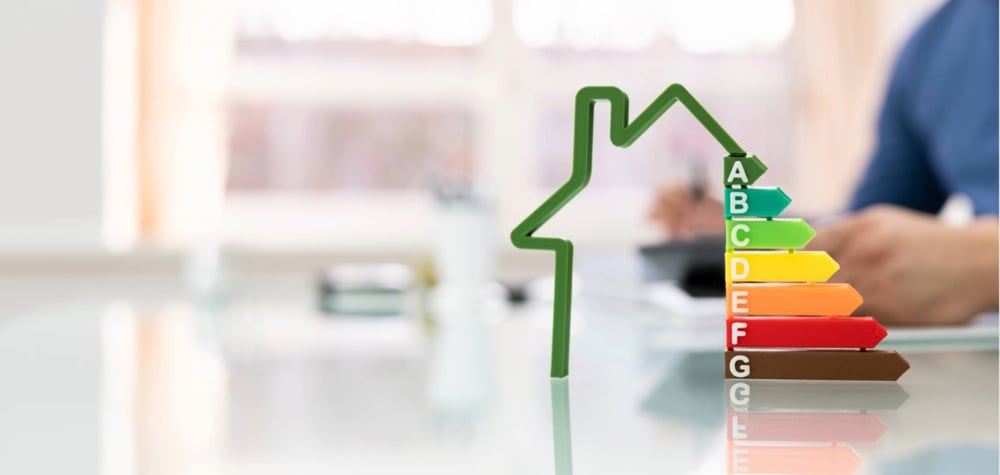
The EnerGuide rating scale, from net zero to high consumption NET ZERO HIGH CONSUMPTION A typical Canadian home Less energy, lower bills, warmer in February More energy, higher bills, colder rooms and draughts

EnerGuide rates a whole house on one scale. The evaluation is how a house gets a number on it.
Before anything else

The Greener Homes Grant and the $40,000 loan are gone.

A great many Canadian contractors are still advertising them. The grant took its final document on 31 December 2025. The loan is fully committed and NRCan states that no further applications can be approved. Enbridge HER+, Better Homes Kingston, HERA Edmonton, SaskPower's retrofit rebate and NRCan's industrial GIFMP have closed too.

We are telling you that at the top of our own home page, on a site that sells rebate work, because you will find out eventually and it may as well be now.

What has not gone away is the work. Nine programmes still require a pre- and post-retrofit EnerGuide evaluation, Ontario pays $600 towards the pair, Medicine Hat made both mandatory for the first time this year, and three mortgage insurers will refund a quarter of your insurance premium on the strength of a rating.

Checked 22 Sep 2026 · every entry linked to its source

What is actually open right now.

We check each of these against the issuing body's own published page and put the date of the check on it. Where a programme's own page publishes no amounts, we publish none either — which is why some of these are shorter than a competitor's version.

Not sure which apply to you? Two questions — where the building is and what kind it is — and we will tell you what is open, what it pays, and whether you actually need an evaluation. No email, no phone number, and it will tell you when the answer is nothing.

What you are actually buying

An evaluation is a measurement, not an opinion.

Two to three hours on site. Every assembly measured, the mechanicals recorded, and a blower door test to establish the real air leakage rate rather than an assumed one. It goes into HOT2000, the federal modelling software, and comes back as a rating, a label and a report saying what to fix first.

Where heat leaves a typical older Canadian house 25–35% Attic and roof 20–35% Air leakage — the invisible one 15–25% Walls 10–15% Windows and doors 10–20% Basement and slab edge

Where the heat actually goes

This is the part that surprises people. In most older Canadian houses the attic and air leakage together lose more than the walls, the windows and the basement combined — and air leakage is invisible, which is why it gets ignored until somebody measures it.

It is also why the answer is so often not the thing you were about to buy. A new furnace in a leaky house is an efficient way to heat the outdoors.

Proportions shown are illustrative of a typical older detached Canadian house. Yours gets measured.

What the audit involves →

How a rebate-qualifying evaluation runs

Two visits, not one.

The commonest surprise for a first-time client: the programmes that pay best require an evaluation before the work and another one after it, frequently by the same advisor. Plan for both from the start and it is straightforward. Discover it afterwards and the rebate is gone.

The five stages of a rebate-qualifying energy evaluation 01 Evaluate
Two to three hours on site. Measured, not estimated.
02 Report
Your rating, your label, and what to fix first.
03 Retrofit
Your contractor, your choice. We do not sell the work.
04 Re-evaluate
The second visit. This is what the programme pays against.
05 Claim
The file goes in with the numbers that prove it.
Residential evaluationHome energy audit in progress
Residential evaluation
How an evaluation works
Going through the reportEnergy efficiency consultation with a homeowner
Going through the report
What the report tells you
Net Zero Ready home programme mark
New build and net zero ready
Net zero ready homes
BOMA Canada ENSPIRE programme mark
Certified BOMA Enspire provider
BOMA BEST and Enspire

Four kinds of client

What we do, and for whom.

Why the licence matters

Not every energy report is one a programme will accept.

An EnerGuide rating has to be produced by a registered energy advisor who has passed NRCan's examinations, working under a licensed Service Organization. The licence — not the individual — is what issues the label. That is the structural reason a programme accepts our file and not a home inspection report.

Ours is Organization Licence Number 9E. It is the oldest thing this company owns and the reason the rest of it works.

Our Service Organization licence, Organization Licence Number 9E, was issued by Natural Resources Canada (NRCan). On 30 July 2026 the Office of Energy Efficiency — the unit that administers the EnerGuide Rating System, Service Organization licensing and energy advisor registration — transferred from NRCan to Environment and Climate Change Canada (ECCC) under Order in Council P.C. 2026-723. Existing licences carry over without interruption. Federal pages are still being updated and most of them currently name NRCan, so you will see both names in this industry for a while; where this site names the licensor it uses the name the licence itself carries. Checked 6 Oct 2026.

  • The licence covers residential. An ERS Service Organization licence and the registered advisors under it cover homes eligible for an ERS assessment. Our commercial and industrial audits are led by Certified Energy Managers and other qualified licence holders — a different credential doing different work, and we do not blur the two.
  • We sell no insulation, windows or heat pumps. The advice is not a sales route to anything, which is the entire point of an independent assessment.
  • We publish what is closed as prominently as what is open. Six of the twenty-eight programmes we track need no evaluation at all, and we say so on their pages.
  • Every programme claim on this site links to its source and carries the date we last checked it.
Head office
Unit 36 – 17665 Leslie St
Newmarket, ON  L3Y 3E3
Alberta
4620 Manila Rd SE
Calgary, AB  T2G 4B7
British Columbia
1975 McCallum Rd
Abbotsford, BC  V2S 3N3

The instrument that settles it

A blower door measuring the air leakage rate of a house ACH50 6.8 attic hatch rim joist window frames basement penetrations

A blower door depressurises the house to 50 pascals and measures how much air the fan has to move to hold it there. That number is the difference between an opinion about draughts and a figure a programme will accept.

Book an evaluation

Tell us about the house.

Five short steps. We will come back with what it costs, when we can get to you, and which programmes your address is actually eligible for.

What is this visit for?
What do you need from us? required
First, who are you?
Where is the home?

The address matters more than anything else here. Several of the best programmes are run by individual towns and cities, so what you can claim really does change from one place to the next.

Anything else, and how to reach you